Lake Charles, LA · Garage Door Service
Openers, Power Outages, and the Houses Around Lake Charles
Why older openers in Lake Charles homes fail during power outages, what the 1975-2005 housing stock means for repairs, and when a call beats a DIY fix.
- Repairs & new doors
- Springs & openers
- Serving 4 nearby communities
When to Call Someone
If your opener hums but the door won't move, or the door drops the second the power blinks off, that's not a fuse you reset and forget. A lot of the openers still running in this area came in with the house, and houses here mostly went up between 1975 and 2005, centered around 1994. That means the motor, the logic board, and the drive gear are all original parts pushing thirty to fifty years old in some cases.
Call someone when the opener reverses for no reason, when it won't respond to the remote but the wall button still works (or vice versa), or when you hear a grinding or clicking from the motor housing during a power outage recovery. Those are signs the gear or board is failing, not just a dead battery in a remote.
Honest limitation: we don't troubleshoot smart-home integration issues over the phone, and if your opener is wired into a whole-house backup system, that's an electrician's job first, ours second. We fix the door and the opener unit. We don't rewire your panel.
The Situation
Across the six main pockets of housing in the service area, the opener stock skews heavily 1980s and 90s. That's chain-drive era equipment for the most part - older belt-drive units showed up later, and a fair number of houses here never got the upgrade. Chain-drive openers are loud but durable, and that's actually worked in people's favor: a lot of them are still running.
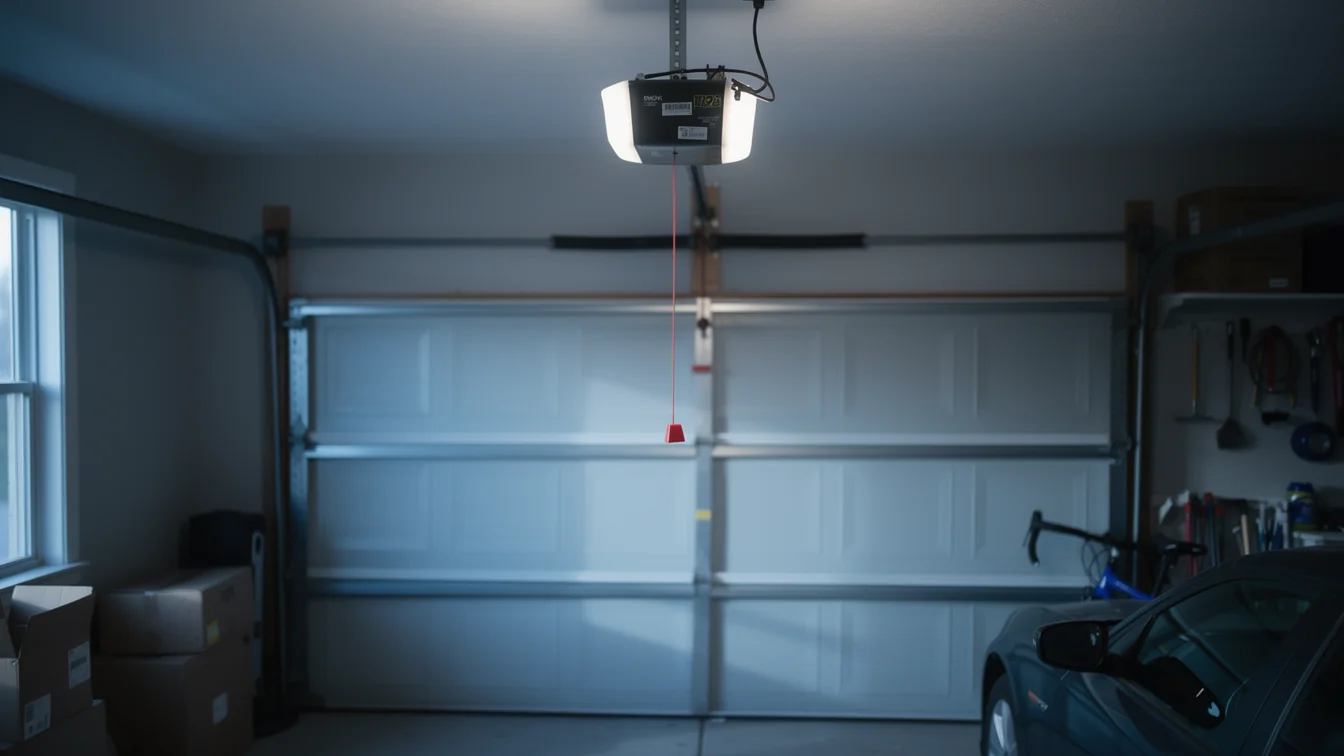
The catch is battery backup. Openers built in that window almost never shipped with one, because battery backup in garage door openers wasn't standard equipment until well after most of these units were installed. So when the power goes, the door doesn't just lose remote control - it's stuck, full stop, unless someone pulls the manual release cord.
With 13,762 owner-occupied houses across the service area, that's a lot of households where a power outage means someone standing in the driveway pulling a red cord in the dark, hoping the spring is balanced enough that the door doesn't come down on them. That's not a design flaw from thirty years ago - it's just what the technology looked like then.
The Seasonal Bit
This area sits in a mild climate with some freeze risk, not a hard winter climate. That matters for openers in a specific way: you're not dealing with ice locking the track shut, but you are dealing with humidity swings that work on circuit boards and wiring harnesses over time, plus the occasional cold snap that stiffens grease on the rail and slows the trolley down just enough to trip a safety reversal.
Power outages aren't a once-a-year event tied to a specific storm season here - they happen enough, spread across the year, that an opener without battery backup is a real inconvenience more than once. An opener that's fine in October can act up after a few freeze-thaw mornings in January, not because the cold damaged it outright, but because thirty-year-old lubricant doesn't flow the same at 38 degrees as it does at 75.
We don't see the kind of ice-dam or deep-freeze failures that openers in northern climates deal with. What we see instead is slow electrical degradation - corroded contacts, a board that resets itself after every outage until one day it doesn't come back.
What Local Conditions Do
Put the housing age and the climate together and you get a specific failure pattern, not a generic one. An opener installed when a house was built in, say, 1991, has now gone through three decades of humid air working into its control board, plus however many short power interruptions have hit the circuit since. Each outage is a small stress event - voltage drops, a restart, sometimes a logic board that doesn't fully recover.
Homeowners out toward Iowa, Carlyss, or Sulphur, all within ten to twelve miles, are running the same era of equipment under the same climate conditions as folks closer into town near Prien or Westlake. The distance doesn't change the failure pattern - the age of the opener does.
With median household income at $79,426 in the area, a mid-range opener replacement with battery backup built in is a realistic fix for most owners here, rather than a stretch. We'd rather tell a homeowner straight that their 1990s chain-drive unit is at the end of its run than keep patching a board that's going to strand them at the next outage.
Frequently asked questions
Why does my garage door opener stop working completely during a power outage?
Most openers installed when houses in this area were built, mainly the 1980s and 90s, didn't come with battery backup as standard. When the power drops, the motor has no power source, so the door stays wherever it was when the outage hit. You'll need the manual release cord to move it until power's back or a backup battery is added.
Is it worth adding battery backup to an old opener?
Usually not on the unit itself - older chain-drive motors weren't built to accept a bolt-on battery backup. The practical fix is replacing the opener with a newer unit that has backup built in. Given the age of a lot of the openers running in this area, replacement often solves more than just the power-cut problem.
Does the humidity here cause opener problems even without storms?
Yes. The mild, humid climate works on circuit boards and wiring contacts over years, even with no dramatic weather involved. Combined with openers that are often decades old, that slow corrosion is a common reason units start acting erratic before they fail outright.
Related garage door services in Lake Charles
More garage door guides
Book garage door service in Lake Charles
Call now or request a quote - tell us what the door is doing and where you are.